
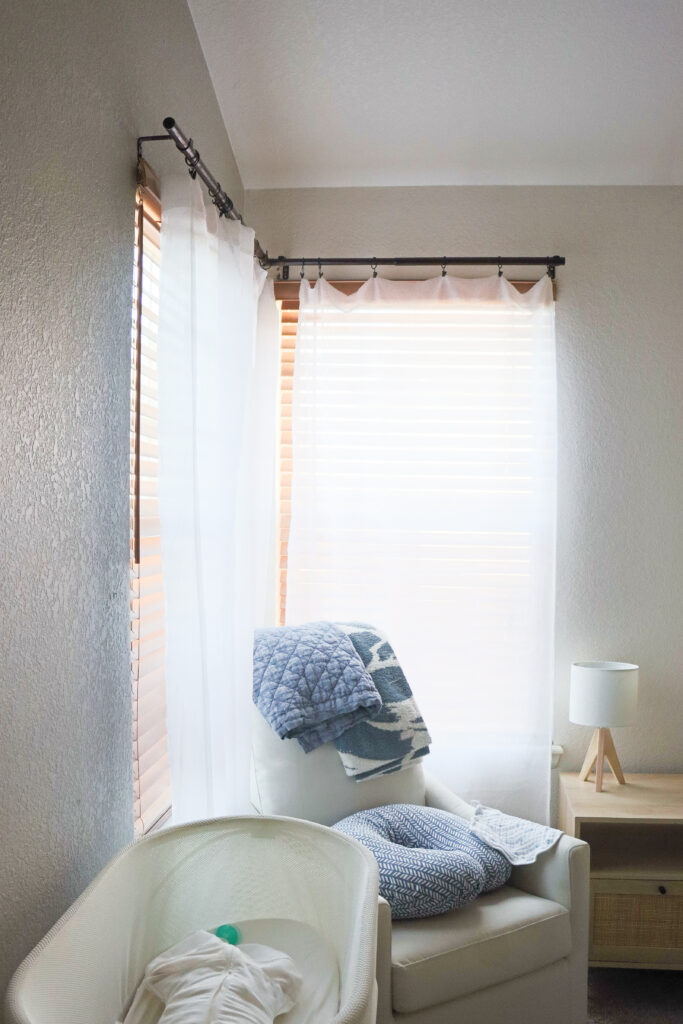
When we brought our baby home, we knew he would be sleeping in our bedroom for the first several months — which is what many pediatric guidelines recommend.
What we didn’t have was a dedicated nursery.
Instead of rearranging our entire home, we created a small, functional nursery corner inside our bedroom that supported night feeds, diaper changes, and early newborn life — without overwhelming the space.
This setup worked for us for almost seven months. Here’s exactly how we designed it, what products were actually worth it, and what I would do differently next time.
If you’re setting up a nursery in your bedroom, especially in a smaller space, this is what worked in real life.
Why We Chose a Bedroom Nursery
There were a few reasons we decided to keep baby in our room:
- It felt more manageable during night feeds.
- It aligned with safe sleep recommendations.
- We didn’t want to overcommit to a full nursery before knowing what we’d actually need.
- Our space simply worked better this way in the early months.
Sharing a room in the newborn stage made night wake-ups easier and less disruptive. It also allowed us to design a nursery setup that was simple, compact, and practical.
This was never meant to be permanent — it was a system for a season.
How We Designed a Nursery Corner in a Small Bedroom
When you’re creating a nursery in your bedroom, every piece has to earn its place.
We focused on:
- A compact sleep space
- Minimal storage
- Soft lighting
- Easy access for night feeds
- Keeping walkways clear (because newborn exhaustion is real)
Instead of turning our bedroom into a full nursery, we carved out a corner that felt intentional but uncluttered.
The goal wasn’t aesthetic perfection.
It was function.
The Bassinet We Chose (And Why We Went With the Snoo)
One of the biggest decisions we made for our bedroom nursery setup was choosing the Snoo.
Because we were sharing a room, sleep quality mattered — not just for the baby, but for us too. The Snoo’s responsive white noise and gentle rocking were major factors in our decision. If he started stirring, it would automatically adjust before fully waking him.
As someone planning to return to work from home during his early months, I knew nap windows would eventually matter. Having a bassinet that could help soothe him back to sleep without me immediately intervening gave me peace of mind heading into that transition.
Another feature that made a difference for us was the built-in swaddle system that secures safely to the bassinet. Especially in the newborn stage, knowing he was safely positioned while we were all sleeping in the same room eased a lot of anxiety.
Was it an investment? Yes.
But for our shared-bedroom setup, the responsive sleep support and safety features made it feel worth it.
If you’re setting up a nursery in your bedroom and are concerned about space, sleep quality, or safety, choosing a compact smart bassinet can make those early months feel much more manageable.
[Insert affiliate link]
What We Actually Used (And What We Didn’t)
One thing I learned quickly: you don’t need as much as you think for a bedroom nursery.
What we used consistently:
- A safe sleep space
- A small changing station or portable caddy
- Soft, dimmable lighting for night feeds
- A minimal storage solution for diapers and essentials
What we didn’t need:
- Large dressers in the bedroom
- Excess decor
- Bulky storage pieces that limited movement
In a shared room, simplicity is your friend.
Lessons I Learned Setting Up a Bedroom Nursery
Looking back, here’s what mattered most:
- Keep night feeding essentials within arm’s reach.
- Choose soft lighting that won’t fully wake everyone up.
- Avoid overcrowding the space.
- Prioritize safe sleep over aesthetics.
- Leave enough walking room — you will be tired.
The bedroom nursery worked because it was practical, not Pinterest-perfect.
When We Transitioned to His Own Room
We originally thought we’d transition around six months, but it ended up being closer to seven.
By that point, his sleep had become more predictable and he had simply outgrown the corner setup.
Keeping him in our room for those first seven months worked well for our family — especially during night feeds and the early transition back into work.
If I were setting up a bedroom nursery again, I’d approach it the same way:
Minimal.
Functional.
Built for a short season.
FAQs About Bedroom Nursery Setups
How long should a baby sleep in the parents’ room?
Many pediatric guidelines recommend at least the first six months. Every family is different, but we transitioned around seven months when sleep felt more consistent.
Is it safe to create a nursery in your bedroom?
Yes — as long as you follow safe sleep guidelines and avoid overcrowding the sleep space.
What do you actually need for a bedroom nursery?
A safe sleep surface, minimal storage, soft lighting, and easy access to feeding essentials. You likely need less than you think.
Final Thoughts
A bedroom nursery doesn’t have to be elaborate to work well.
For us, it was a simple, intentional setup that supported those early months without overwhelming our space.
It was never meant to be permanent — just practical.
And sometimes that’s exactly what you need in the newborn stage.
Click Below to Shop Products From the Post

Having trouble viewing the carousel? Click here to shop over on LTK It.
